Article
Desk work and back pain: what can movement do?
If you sit all day, your body is not injured. It has adapted. That difference matters, because it changes where you start.
What happens while you sit
In a seated position the hip flexors shorten, the glutes switch off, the upper back rounds forward and the neck follows the screen. Meanwhile the deep muscles that stabilise the spine get almost nothing to do. After eight hours your lower back has not weakened in a day; your body has learned that this is a way to exist.
So the evening ache is often not a sign of injury but the result of postural muscles doing nothing all day.
What kind of movement helps
The kind that does exactly what sitting does not: it moves the spine in every direction, wakes the deep muscles, and opens the front of the hip and the chest.
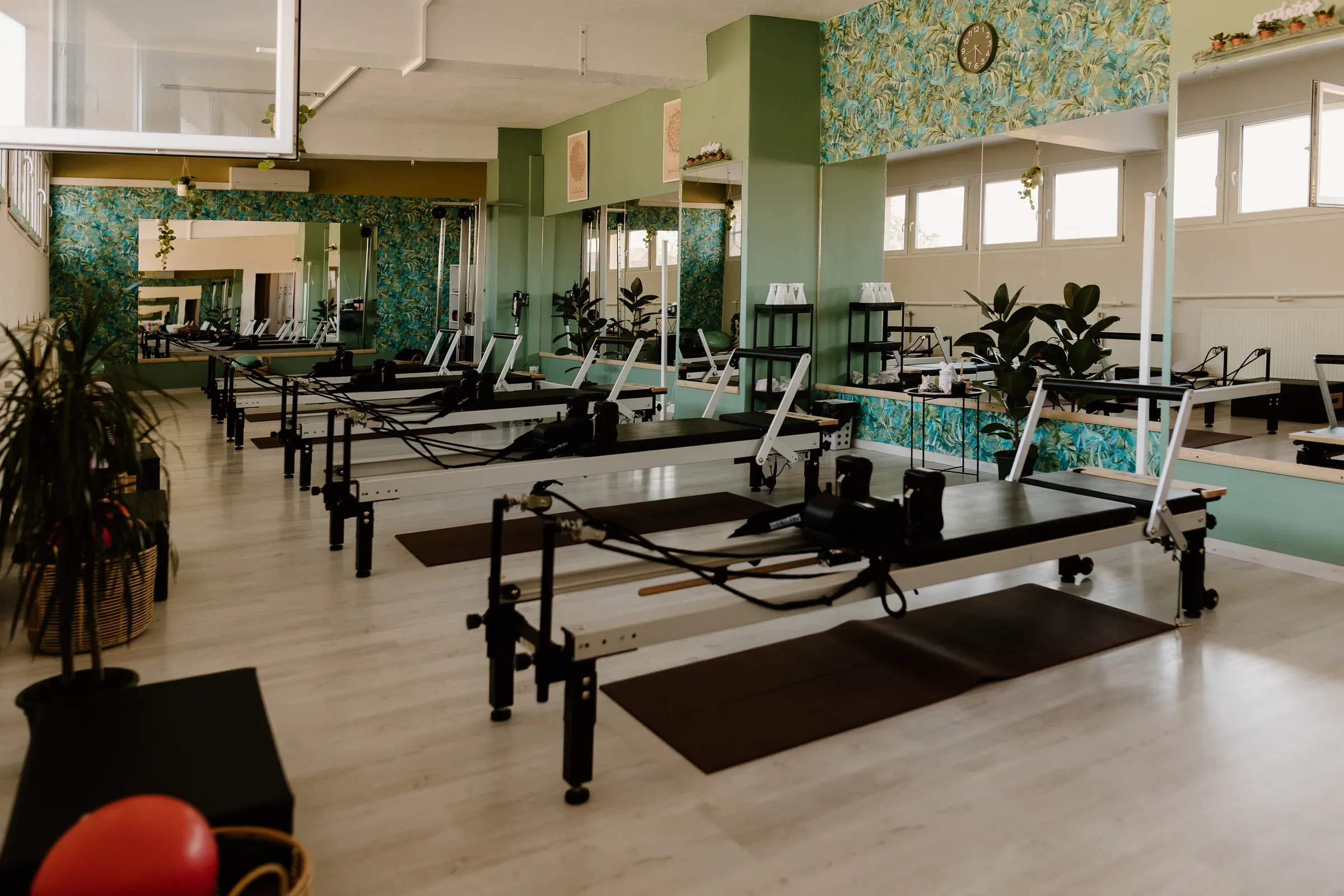
The reformer is a good tool for this because the springs both assist and resist. The machine supports positions you could not hold on your own, and the movement stays controlled throughout. Spine training works on the same thing on the mat: range of motion, postural muscles, conscious breathing. Core training strengthens the trunk stability that carries your posture all day.
What you can do on your own
The most useful habit is not an exercise but standing up regularly. One minute of movement every hour is worth more than catching up in a single evening. Screen height helps, and so does using the backrest of your chair.
When not to start with movement
If the pain is sharp, radiates into your leg, comes with numbness, or follows a recent operation or accident, see a doctor or a physiotherapist first. A group class is for prevention and general movement; it is not treatment, and it does not replace an examination. This is not over caution: in a bad state even a good exercise can do harm.
If it is simply the stiffness of desk work, the best thing you can do is begin. Our first visit page has everything you need for the start.